What Do Receptions Mean in Football? Definition & Stats
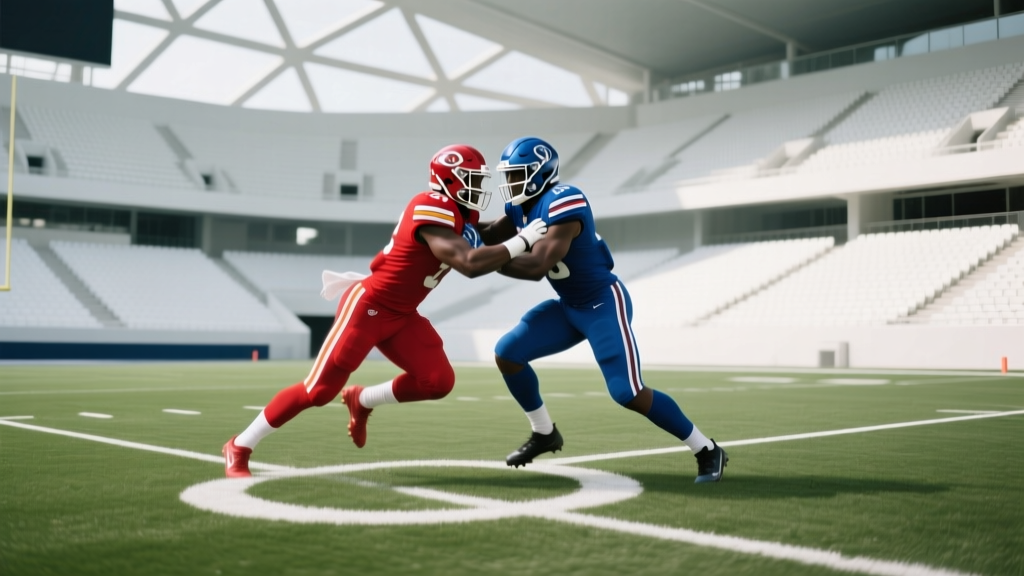
In football, receptions refer to the number of times a player successfully catches a forward pass from the quarterback. This statistic is primarily used to measure the performance of wide receivers, tight ends, and running backs in the passing game.
Understanding Receptions in Football
A reception occurs when an eligible receiver gains complete control of a forward pass, with both feet (or any part of the body other than hands) touching inbounds, and maintains possession long enough to perform an act common to the game. It's one of the most fundamental stats in evaluating offensive skill players.
Key Elements of a Legal Reception
- The pass must be thrown forward from behind the line of scrimmage.
- The receiver must have control of the ball before going out of bounds or being contacted by a defender.
- Both feet or another body part (besides hands) must touch inbounds after securing the catch.
- The receiver must maintain possession through the process of hitting the ground or completing a move.
Why Receptions Matter in Player Evaluation
Receptions are a direct indicator of a player’s involvement and reliability in the passing offense. High reception totals often correlate with consistent performance, route-running ability, and trust from the quarterback.
Players Who Typically Record Receptions
- Wide Receivers (WR): Primary targets; usually lead their teams in receptions.
- Tight Ends (TE): Versatile players who line up as blockers or receivers; key in short-to-intermediate routes.
- Running Backs (RB): Often used on screen passes and check-downs; contribute significantly in passing games.
- Slot Receivers: Operate from inside positions; known for high catch volume due to quick, precise routes.
Receptions vs. Other Passing Statistics
While related, receptions are distinct from other stats like targets, yards, and touchdowns. Understanding the differences helps analyze player efficiency and role.
| Statistic | Definition | Example |
|---|---|---|
| Receptions | Successful catches of forward passes | 10 catches in a game |
| Targets | Number of passes thrown to a player | 15 targets, 10 receptions = 66.7% catch rate |
| Receiving Yards | Total yardage gained after the catch | 120 yards on 10 receptions |
| Touchdowns | Receptions that result in a score | 1 TD on 10 receptions |
This comparison highlights how receptions serve as the foundation for evaluating receiving success. A high number of receptions with low yards may indicate a possession receiver, while fewer receptions with big gains suggest a deep threat.
Historical Leaders in Career Receptions
| Player | Position | Career Receptions | Years Active | Teams |
|---|---|---|---|---|
| Larry Fitzgerald | WR | 1,432 | 2004–2020 | Arizona Cardinals |
| Tony Gonzalez | TE | 1,325 | 1997–2013 | Chiefs, Falcons |
| Jason Witten | TE | 1,228 | 2003–2020 | Cowboys, Raiders |
| Marvin Harrison | WR | 1,102 | 1996–2008 | Colts |
| Antonio Brown | WR | 943 | 2010–2021 | Steelers, Buccaneers |
The data shows that elite wide receivers and tight ends dominate the all-time reception leaderboard. Larry Fitzgerald holds the record, showcasing longevity and consistency. Tight ends like Gonzalez and Witten prove their dual-threat value in modern offenses. These numbers reflect not only talent but also team offensive schemes favoring frequent short-to-medium throws.
Single-Season Reception Records
The NFL single-season reception record is held by Michael Thomas, who caught 149 passes in 2019 while playing for the New Orleans Saints. This broke the previous record of 143 set by Marvin Harrison in 2002. Such performances highlight the evolution of pass-heavy offensive systems in today’s game.
High reception seasons are now more common due to increased reliance on spread offenses, quick passes, and slot formations designed to exploit mismatches and sustain drives.
Frequently Asked Questions About Receptions in Football
What counts as a reception in football?
A reception is credited when a player legally catches a forward pass, maintains control, and gets at least two feet (or another body part) down in bounds. The player must also survive the "ground test"—not lose the ball upon contact with the turf.
Do dropped passes count as receptions?
No, dropped passes do not count as receptions. If a player fails to maintain control, even if they briefly had the ball, it is recorded as an incompletion and does not affect the receiver’s stats.
Can a quarterback have receptions?
Yes, quarterbacks can have receptions, typically on trick plays like touchdown passes or flea-flickers. Though rare, any eligible player who catches a forward pass is credited with a reception.
Is a reception the same as a completion?
Yes, every reception is a completion. However, not all completions result in receptions if the receiver fails to maintain possession. The term "completion" refers to the passer’s stat, while "reception" credits the receiver.
How are receptions used in fantasy football?
In fantasy football, receptions are valuable, especially in PPR (Points Per Reception) leagues. Each catch typically earns a player 1 point, rewarding consistency and increasing the value of pass-catching running backs and reliable wide receivers.
More Articles
 Where to Watch Clemson vs SMU Football 2025
 Where Is the Buffalo Bills Football Stadium Located?
 Best Badminton Data: Precision Metrics, Equipment Specifications, and Performance Benchmarks That Matter
 Who Owns Real Madrid? The Member-Owned Model Explained
 Who Are the Best Footballers in 2025? Top Players Ranked
 What Does First Down Mean in Football?
 Football Season Games: NFL, Premier League & More (2026)
 Where to Buy NFL Football Jerseys | Top Authentic Sites
 What Channel Is WVU Football On Today?
 What Do Football Players Wear? Full Kit Breakdown