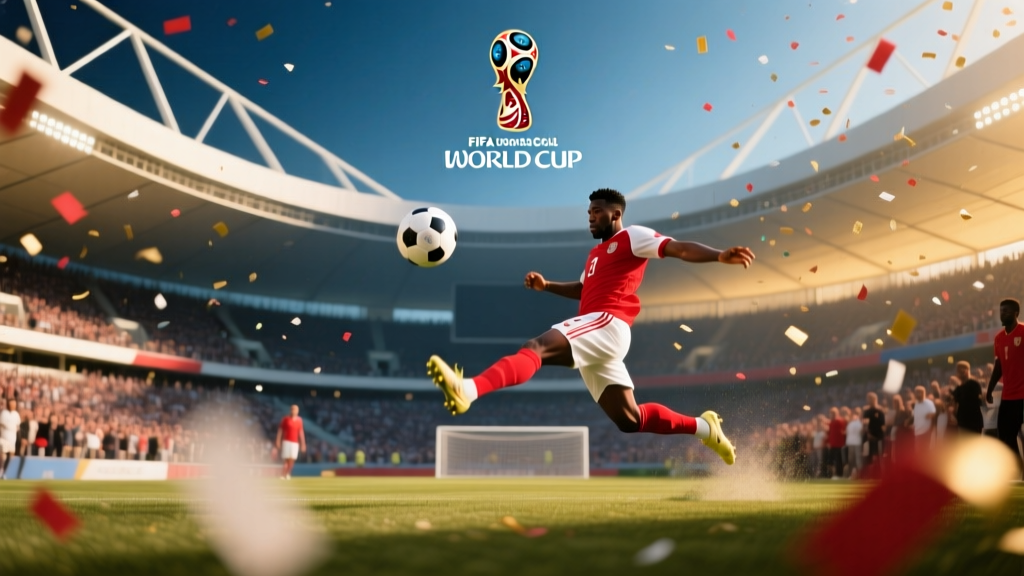
How Often Is the Football World Cup Held?
The FIFA World Cup is held every four years, bringing together the top national soccer teams from around the globe to compete for the most prestigious trophy in international football.
Understanding the FIFA World Cup Schedule
The FIFA World Cup takes place every four years, a tradition that began in 1930. This quadrennial schedule allows sufficient time for qualification tournaments across six continental confederations and gives host nations ample preparation time.
Why Every Four Years?
- Historical precedent set by the inaugural tournament in 1930
- Allows time for global qualification processes involving over 200 national teams
- Enables host countries to build infrastructure and organize logistics
- Preserves the tournament's prestige and global anticipation
- Aligns with major broadcasting and sponsorship cycles
History of the FIFA World Cup
Since its inception, the World Cup has only been interrupted twice—during World War II in 1942 and 1946. Otherwise, the tournament has maintained its four-year rhythm, becoming the most-watched sporting event in the world.
Milestone Tournaments
- 1930: First World Cup hosted by Uruguay
- 1950: Return after WWII; Brazil hosts
- 1994: Hosted in the United States, marking major global expansion
- 2002: First co-hosted edition (South Korea & Japan)
- 2022: First Winter World Cup held in Qatar
| Tournament | Year | Host Country(s) | Champion | Matches Played | Attendance (Millions) |
|---|---|---|---|---|---|
| FIFA World Cup | 2018 | Russia | France | 64 | 3.03 |
| FIFA World Cup | 2022 | Qatar | Argentina | 64 | 3.40 |
| FIFA World Cup | 2014 | Brazil | Germany | 64 | 3.43 |
| FIFA World Cup | 2010 | South Africa | Spain | 64 | 3.18 |
| FIFA World Cup | 2006 | Germany | Italy | 64 | 2.76 |
The data shows consistent match volume and rising global interest, with attendance peaking at 3.43 million in 2014. The 2022 edition in Qatar, though smaller in physical attendance due to venue capacity, achieved record digital engagement.
Upcoming and Future Tournaments
The next men's FIFA World Cup will be held in 2026 and will be jointly hosted by the United States, Canada, and Mexico. This edition will mark a historic expansion to 48 teams.
Key Changes in 2026
- First three-nation co-hosting arrangement
- Expansion from 32 to 48 teams
- Increased number of matches (104 total)
- More games spread across North America
- Enhanced focus on sustainability and legacy planning
Women's FIFA World Cup Frequency
The FIFA Women's World Cup also follows a four-year cycle, beginning in 1991. The most recent edition was held in 2023 in Australia and New Zealand, won by Spain. The next tournament is scheduled for 2027, with host selection underway.
Common Questions About the Football World Cup
How often is the men's FIFA World Cup held?
The men's FIFA World Cup is held every four years, a schedule that has been maintained since the first tournament in 1930, except during World War II.
Will the World Cup remain every four years?
Yes, FIFA has confirmed that the World Cup will continue to be held every four years. Despite discussions about potential changes, the current format remains stable through at least 2030.
Why isn't the World Cup held every two years?
A two-year cycle would disrupt domestic leagues, player fitness, and qualification integrity. The four-year gap maintains exclusivity, global excitement, and logistical feasibility.
Has the World Cup always been held every four years?
Yes, except for cancellations in 1942 and 1946 due to World War II, the tournament has followed a strict four-year schedule since its inception in 1930.
How many teams participate in the 2026 World Cup?
The 2026 FIFA World Cup will feature 48 national teams, expanded from 32, making it the largest tournament in World Cup history.
In summary, the FIFA World Cup is held every four years, a tradition that balances competitive fairness, global participation, and organizational readiness. With increasing viewership and expanding formats, the tournament continues to grow in scale and significance.
More Articles
 Messi Football Career Start: Early Years Explained
 Oregon Ducks Game Time Today: Start Time & TV Info
 How Often Is the World Cup Held? Every 4 Years
 Cheap vs Premium Football Boots: Performance, Durability, and Real-World Value
 Where Is Aston Villa Football Club Located?
 When Does Football Start Today? Kickoff Times for Oct 25
 How Does a Football Work? Science & Design Explained
 What Channel Is the Kansas City Chiefs Game On?
 What Time Do Football Games Start Today? Full Schedule
 Seahawks Final Score: Seahawks 27, Rams 24 - Oct 13, 2025