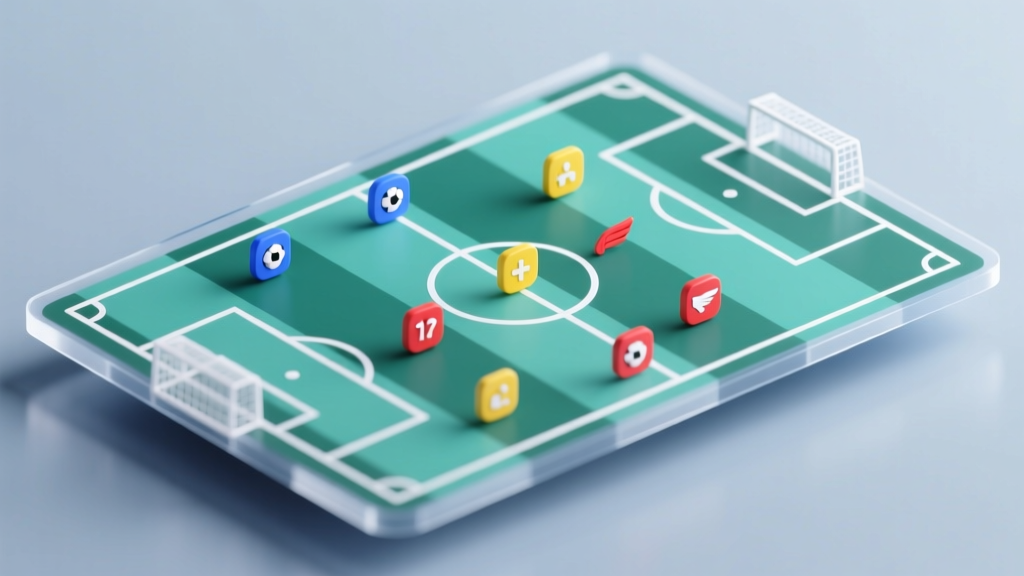
How Many Positions Are in Football? Full Breakdown
There are 11 primary positions in football (soccer), each with specialized roles grouped into four main categories: goalkeeper, defenders, midfielders, and forwards. These positions vary by formation, strategy, and player strengths.
Understanding Football Positions
Football is a team sport played between two teams of eleven players each. Each player occupies a specific position on the field, contributing to both offensive and defensive phases of play. The organization of these roles depends heavily on tactical formations such as 4-3-3, 3-5-2, or 4-4-2.
Main Position Categories
- Goalkeeper (GK): The only player allowed to use hands within the penalty area; responsible for preventing goals.
- Defenders: Protect the goal and stop opposing attackers. Includes center-backs, full-backs, and wing-backs.
- Midfielders: Link defense and attack. Can be defensive, central, or attacking midfielders.
- Forwards: Primary goal scorers. Include strikers, second strikers, and wingers.
Breakdown of Key Positions
Each category contains sub-positions that adapt based on team tactics and opponent strategies.
Goalkeeper Roles and Variants
- Classic Keeper: Stays near the line, excels in shot-stopping.
- Sweeper-Keeper: Aggressively comes off the line to intercept through balls (e.g., Manuel Neuer).
Defensive Positions Explained
- Center-Back (CB): Central defenders who mark strikers and win aerial duels.
- Full-Back (RB/LB): Right and left defenders providing width and support in attack.
- Wing-Back (RWB/LWB): In formations with three center-backs, they act more like wingers while retaining defensive duties.
Midfield Roles and Responsibilities
- Defensive Midfielder (CDM): Shields the backline, breaks up opposition plays.
- Central Midfielder (CM): Controls tempo, distributes passes, supports both defense and attack.
- Attacking Midfielder (CAM): Operates behind the striker, creates scoring chances.
Forward Line Positions
- Striker / Center Forward (CF): Main goal threat, often positioned centrally.
- Second Striker (SS): Plays just behind the main striker, links play and scores.
- Winger (LW/RW): Wide attackers who dribble and deliver crosses.
- Inside Forward: Wingers who cut inside to shoot (e.g., Mohamed Salah).
Common Formations and Position Distribution
Different formations distribute the 11 players across the pitch in unique ways, altering positional responsibilities.
| Formation | Goalkeeper | Defenders | Midfielders | Forwards | Notable Teams/Managers |
|---|---|---|---|---|---|
| 4-3-3 | 1 | 2 CB + 2 FB | 3 CM/CDM | 2 Wingers + 1 CF | Liverpool (Jürgen Klopp), Barcelona |
| 3-5-2 | 1 | 3 CB | 2 WB + 3 CM | 2 ST | Inter Milan (Antonio Conte), Italy NT |
| 4-4-2 | 1 | 2 CB + 2 FB | 2 CM + 2 WM | 2 ST | Manchester United (Sir Alex Ferguson) |
| 4-2-3-1 | 1 | 2 CB + 2 FB | 2 CDM + CAM + 2 WM | 1 CF | Real Madrid, Bayern Munich |
| 5-3-2 | 1 | 3 CB + 2 WB | 3 CM | 2 ST | Italy (Euro 2020), Spain NT |
The table illustrates how top teams deploy players across various formations. The 4-3-3 remains dominant in elite European football due to its balance and pressing efficiency. Meanwhile, 3-5-2 and 5-3-2 systems are favored when compactness and wing-back mobility are prioritized. Tactical flexibility has increased the hybridization of roles—such as full-backs acting as wingers or midfielders rotating into attack.
Frequently Asked Questions About Football Positions
How many players are on a football team including substitutes?
A football team has 11 starting players on the field. During professional matches, up to 12 additional players may be named as substitutes (for a total of 23), with up to five allowed to enter the game under current FIFA rules.
What is the most important position in football?
The importance of a position depends on the team's strategy. However, the central midfielder and goalkeeper are often considered pivotal—central midfielders control game tempo, while goalkeepers prevent goals and initiate attacks in modern systems.
Can players change positions during a match?
Yes, players frequently switch positions during a match. Modern football emphasizes fluidity, with roles like 'inverted full-backs' or 'false nines' requiring positional interchange to exploit space and confuse opponents.
What position is number 10 in football?
The number 10 traditionally represents the attacking midfielder (CAM), a creative playmaker who operates behind the striker. Legendary players like Diego Maradona, Pelé, and Mesut Özil wore this jersey, symbolizing creativity and vision.
Which position runs the most in football?
Central midfielders typically cover the most distance during a match, averaging between 10–13 kilometers per game. Their role requires constant movement to support defense and attack, maintain possession, and press opponents.
More Articles
 Where to Watch Football Free in 2025 | Legal Streaming Guide
 Football Cleats by Position: What to Choose
 How Many Quarters in American Football? Full Breakdown
 How Many Goals Has Messi Scored in His Career?
 Who Does IU Football Play Today? Game Time & TV Info
 Where Did Jaden Daniels Play College Football?
 How Many Football Players on a Team? Full Breakdown
 Where Does UCLA Play Football? Home Stadium Info
 How Old Is Arizona State Football Coach Kenny Dillingham?
 Where Does Army Play Football? Home Stadium & Details