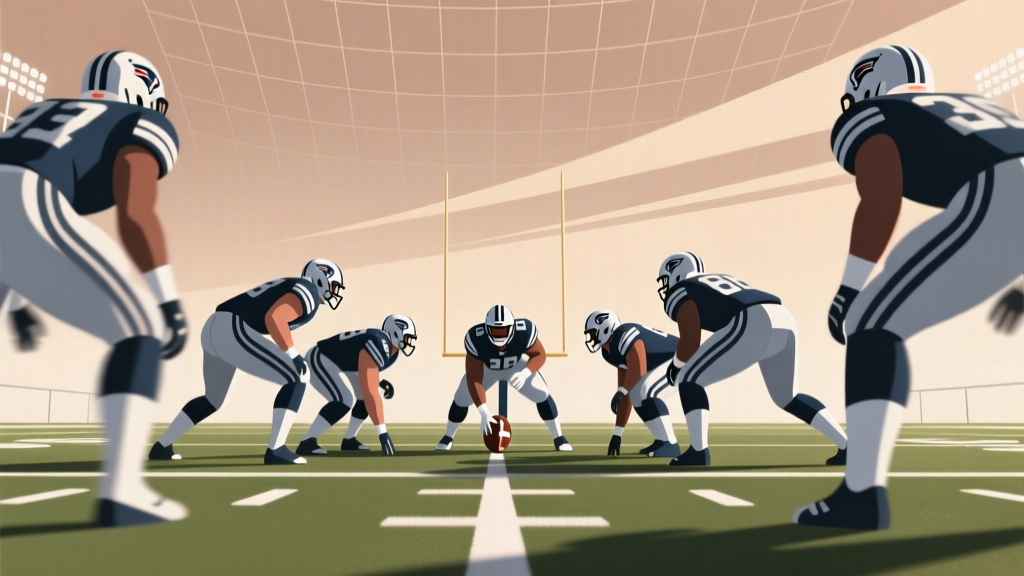
How Many Players on Offense in Football?
In American football, there are 11 players on offense for each team during a play. This standard applies across all levels of the sport, including the NFL, college (NCAA), and high school.
Understanding Offensive Player Count in Football
The offensive unit in American football consists of exactly 11 players on the field at any given time. This number is strictly enforced by the rules of the game. Exceeding or falling short of this number results in penalties such as "illegal formation" or "too many men on the field." The structure ensures fair competition and strategic balance between offense and defense.
Why 11 Players?
The 11-player rule has been a foundational element of football since its early development. It allows for a balanced mix of skill positions and linemen, enabling complex strategies while maintaining control and safety on the field.
Breakdown of Offensive Positions
The offensive lineup includes a combination of skill players and blockers. Each position serves a specific role in executing plays, whether passing, running, or protecting the quarterback.
- Quarterback (QB): The leader of the offense who calls plays and throws passes.
- Running Back (RB): Carries the ball on rushing plays and may catch passes.
- Wide Receivers (WR): Typically 1–3 on the field; responsible for catching passes.
- Tight End (TE): A hybrid player who blocks like a lineman and catches like a receiver.
- Offensive Line (OL): Five players (left tackle, left guard, center, right guard, right tackle) who protect the QB and open running lanes.
Common Offensive Formations
Different formations adjust the positioning of these 11 players to exploit defensive weaknesses:
- Shotgun: QB lines up several yards behind the center; ideal for passing.
- I-Formation: RB lines up directly behind the QB; emphasizes power running.
- Spread: Multiple WRs spread across the field; stretches the defense horizontally.
- Pro Set: Two RBs side-by-side; offers balanced run-pass options.
| Position | Typical Number on Field | Primary Role |
|---|---|---|
| Quarterback (QB) | 1 | Play execution, passing, decision-making |
| Running Back (RB) | 1–2 | Rushing, receiving, blocking |
| Wide Receiver (WR) | 1–3 | Route running, catching passes |
| Tight End (TE) | 0–1 | Blocking, receiving |
| Offensive Line (OL) | 5 | Pass protection, run blocking |
The table confirms that the offensive line always consists of five players, while skill positions vary depending on strategy. Teams adjust WR, RB, and TE counts to match game situations, but the total remains fixed at 11. This flexibility within a strict framework enables diverse offensive schemes while preserving competitive fairness.
Variations Across Leagues and Levels
While the 11-player rule is universal in traditional American football, some variations exist in alternative formats:
- Youth Football: May use fewer players (e.g., 8-man or 6-man) to accommodate smaller rosters and fields.
- Flag Football: Often played with 5–7 offensive players; gaining popularity, especially in non-contact leagues.
- Indoor Football: Leagues like the IFL use 8 players per side due to shorter field length.
However, at the professional and collegiate levels, 11 players on offense remains the standard.
Frequently Asked Questions About Football Offensive Players
How many players are allowed on the offensive line?
Exactly five players make up the offensive line: left tackle, left guard, center, right guard, and right tackle. All five must be positioned on the line of scrimmage at the snap.
Can a team have more than 11 players on offense?
No. Having more than 11 players on the field during a play results in a "too many men on the field" penalty, which is a 5-yard penalty and a loss of down in most cases.
What happens if an offensive player goes in motion illegally?
If more than one player is in motion at the snap, or if a player moves toward the line of scrimmage during motion, it’s an illegal motion penalty (5 yards). Only one player may be in motion, and they must not move toward the line.
Do all 11 offensive players have to be on the line of scrimmage?
No. Only seven players are required to be on the line of scrimmage, including the five offensive linemen and two additional players (usually tight ends or receivers). The other four can be off the line, typically in the backfield or split out wide.
How does substitution work on offense?
Teams can substitute freely between downs. In the NFL and NCAA, substitutions are common to tailor personnel to specific situations (e.g., using extra receivers on passing downs). There is no limit on how many players can be substituted, as long as only 11 are on the field at the snap.
More Articles
 Who Playing Football Tonight? Key Matchups & Lineups
 What Does AFC Stand For in Football? Explained
 When Does Preseason Start for Football? Key Dates Explained
 Who Is the Best Football Defender in 2025?
 Who Plays Football on Thursday? NFL & College Teams
 How Many Referees in Football? Full Breakdown
 Football Cleats by Position: What to Choose
 How Long Is a Middle School Football Game?
 What Do They Call Football in England? Answered
 What Does Bye Mean in Fantasy Football? Explained