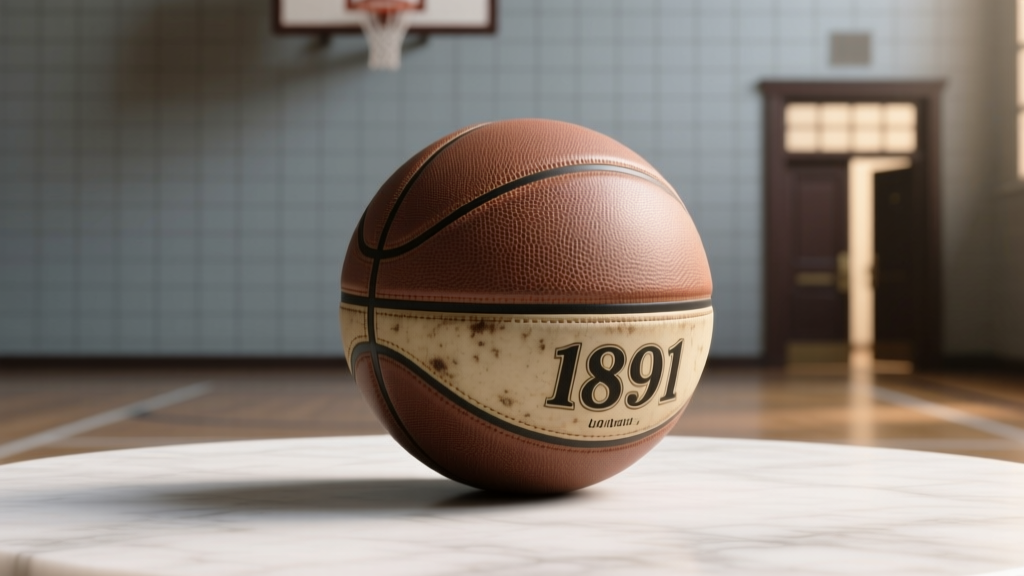
When Was Basketball Founded? Key Facts & History
Basketball was founded on December 1, 1891, by Dr. James Naismith in Springfield, Massachusetts, as a way to keep athletes active indoors during winter.
The Origins of Basketball
Dr. James Naismith, a Canadian physical education instructor, invented basketball in 1891 at the International YMCA Training School in Springfield, Massachusetts. Tasked with creating a new indoor game to engage students during the cold New England winters, Naismith sought a sport that was less injury-prone than football and could be played in a confined space.
Why Was Basketball Created?
- To provide a safe, engaging indoor activity during winter months
- To maintain physical fitness for athletes when outdoor sports were impractical
- To emphasize skill over physical contact, reducing injuries
- To develop teamwork and strategic thinking among players
How the Game Evolved from Its First Version
The original rules of basketball were drastically different from today’s game. Naismith wrote 13 basic rules, and the first game used a soccer ball and two peach baskets as goals. The bottoms of the baskets remained closed, requiring someone to retrieve the ball after each score.
Key Changes in Early Basketball History
- Introduction of dribbling (not part of the original game)
- Replacement of peach baskets with metal hoops and backboards
- Standardization of court dimensions and ball size
- Formation of organized leagues, including the NBA in 1946
| Year | Event | Significance |
|---|---|---|
| 1891 | First game played | Naismith introduces basketball with 13 rules |
| 1893 | First college game | Geneva College vs. Vanderbilt University |
| 1895 | Dribbling introduced | Players allowed to move with the ball |
| 1936 | Olympic debut | Basketball becomes an official Olympic sport |
| 1946 | BAA formed (precursor to NBA) | Professional league established in U.S. |
| 1949 | NBA officially formed | Merge of BAA and NBL creates modern NBA |
| 1976 | NBA-ABA merger | Incorporates slam dunk contests and 3-point line influence |
The timeline shows how basketball evolved from a simple indoor exercise into a global professional sport. Key milestones like the Olympic inclusion and NBA formation reflect its rapid institutional growth and international appeal within less than a century.
Global Spread and Institutional Growth
After its invention in the U.S., basketball quickly spread through YMCA networks and educational institutions. By the early 20th century, it had reached Europe, South America, and Asia. FIBA (International Basketball Federation) was founded in 1932, standardizing international rules and organizing world championships.
Factors That Accelerated Basketball's Popularity
- Adoption by colleges and universities across North America
- Media coverage and televised games starting in the 1950s
- Star athletes like Michael Jordan boosting global interest
- Expansion of the NBA into international markets
- Inclusion in high school and youth programs worldwide
Frequently Asked Questions About When Basketball Was Founded
Who invented basketball and when?
Dr. James Naismith invented basketball on December 1, 1891, in Springfield, Massachusetts, while working as a physical education instructor at the International YMCA Training School.
Why was basketball created?
Basketball was created to provide a safe, indoor team sport for athletes during the winter months when outdoor activities were limited, especially in cold climates.
What were the original rules of basketball?
The original game had 13 rules written by Naismith, including no running with the ball, no physical contact, and using a soccer ball and peach baskets as goals. Players could not dribble initially.
When did basketball become an official Olympic sport?
Basketball became an official Olympic sport at the 1936 Summer Olympics in Berlin, Germany, where the U.S. won the first gold medal.
How has basketball changed since it was founded?
Since its founding, basketball has introduced dribbling, standardized equipment, professional leagues (like the NBA), shot clocks, three-point lines, and global competitions, transforming from a classroom experiment into a multi-billion-dollar international sport.
More Articles
 Where Was Basketball Created? Origin & History
 What PSI Should a Basketball Be? Official Guidelines
 Who Won the Basketball Game? Latest Results & Analysis
 The Best Basketball for Tennis Courts: Surface Compatibility, Grip, Durability, and Real-World Performance
 Regulation Basketball Size by League & Age
 How Many Players Are on a Basketball Court? Full Breakdown
 Where to Watch the Basketball Game in 2025
 Who Won Basketball Olympics 2024? Full Results & Stats
 When Does Duke Play Basketball? 2024-2025 Schedule
 How Many People on a Basketball Team? Court & Roster Sizes