What Do Small Forwards Do in Basketball?
Small forwards in basketball are versatile players who score, defend multiple positions, rebound, and facilitate offense, often serving as key two-way contributors on both ends of the court.
What Does a Small Forward Do? Core Responsibilities
The small forward (SF) is one of the most multifaceted positions in basketball. Often considered the 'swingman,' this player blends scoring ability, defensive flexibility, and athleticism to impact all facets of the game. Unlike specialized roles such as point guards or centers, small forwards must be effective in nearly every statistical category.
Primary Roles of a Small Forward
- Scoring versatility: Capable of shooting from outside, driving to the basket, and finishing in transition.
- Defensive adaptability: Guards wings, switches onto guards or power forwards, and often takes the toughest perimeter assignment.
- Rebounding: Contributes on both offensive and defensive glass despite not being the tallest player.
- Playmaking: Initiates offense when primary ball-handlers are covered, especially in modern NBA schemes.
- Floor spacing: Stretches the defense with three-point shooting in contemporary lineups.
How Small Forwards Score: Offensive Skill Set
Modern small forwards must be efficient scorers from all three levels—inside, mid-range, and beyond the arc. Elite players at this position often lead their teams in points per game due to high usage rates and shot volume.
Common Scoring Methods
- Transition scoring: Finishing fast breaks with dunks or pull-up jumpers.
- Isolation plays: Using size and skill to create shots against smaller defenders.
- Catch-and-shoot threes: Capitalizing on spacing created by star teammates.
- Post-ups: Exploiting mismatches against slower guards or undersized defenders.
- Off-ball movement: Cutting to the basket or relocating for open looks.
Defensive Impact of Small Forwards
Defensively, small forwards are critical in switching schemes and guarding elite wings. Their combination of speed, strength, and IQ allows them to disrupt passing lanes, contest shots, and limit star opponents.
Key Defensive Traits
- Ability to guard positions 1 through 4 effectively
- High steal and block rates relative to position
- Active hands and strong closeouts on shooters
- Leadership in communication and rotations
| Player | Team (2024-25) | PPG | RPG | APG | SPG | BPG | 3P% |
|---|---|---|---|---|---|---|---|
| LeBron James | Los Angeles Lakers | 24.5 | 7.6 | 8.0 | 1.2 | 0.6 | 36.6% |
| Paul George | Philadelphia 76ers | 22.3 | 6.1 | 5.5 | 1.4 | 0.4 | 41.2% |
| Jayson Tatum | Boston Celtics | 27.8 | 8.1 | 4.9 | 1.1 | 0.9 | 39.5% |
| Jimmy Butler | Miami Heat | 21.4 | 5.9 | 5.6 | 1.3 | 0.5 | 35.8% |
| Brandon Ingram | Toronto Raptors | 22.7 | 5.3 | 5.1 | 0.8 | 0.5 | 37.9% |
The table above highlights the statistical diversity among top small forwards in the 2024-25 NBA season. Jayson Tatum leads in scoring and rebounding, reflecting his role as a primary option. Paul George stands out with elite three-point efficiency, while LeBron James maintains remarkable playmaking volume. These players exemplify how small forwards contribute across multiple categories, making them indispensable in modern offenses and defenses.
Evolution of the Small Forward Position
Over the past two decades, the small forward role has evolved from a traditional wing scorer to a dynamic, all-in-one player. The rise of positionless basketball has elevated the importance of switchable, skilled athletes who can handle the ball, shoot, and defend at a high level.
Historical vs. Modern Expectations
- 1990s–2000s: Focused on mid-range scoring and slashing (e.g., Scottie Pippen, Vince Carter).
- 2010s–Present: Emphasis on three-point shooting, playmaking, and defensive versatility (e.g., LeBron James, Kawhi Leonard).
- Future trends: Increased ball-handling responsibilities and hybrid roles blending SF and PF duties.
Frequently Asked Questions About Small Forwards
What makes a good small forward in basketball?
A good small forward combines scoring versatility, defensive agility, rebounding effort, and basketball IQ. They must be able to shoot, drive, pass, and guard multiple positions effectively, making them essential in today’s pace-and-space NBA.
Who are some of the best small forwards in NBA history?
All-time greats include Larry Bird, LeBron James, Kobe Bryant, Julius Erving, and Scottie Pippen. These players excelled in scoring, defense, and leadership, often leading their teams to championships through two-way dominance.
Can a small forward be a team's primary scorer?
Yes, many small forwards serve as primary offensive options. Players like Jayson Tatum, Kevin Durant, and Giannis Antetokounmpo regularly lead their teams in scoring, usage, and clutch performance.
Do small forwards need to be tall?
While ideal height ranges from 6'6" to 6'9", success depends more on athleticism, skill, and versatility than height alone. Players like Matisse Thybulle (6'5") succeed through elite defense and mobility despite being shorter than average.
How do small forwards differ from shooting guards?
Small forwards typically rebound more, defend bigger players, and have a more balanced offensive role. Shooting guards focus more on off-guard scoring and spot-up shooting, though the distinction has blurred in modern basketball.
More Articles
 NBA Games Tonight: Schedule, Start Times & How to Watch
 Next Warriors Game: Date, Time & How to Watch
 Alabama Basketball Next Game & Schedule (2026)
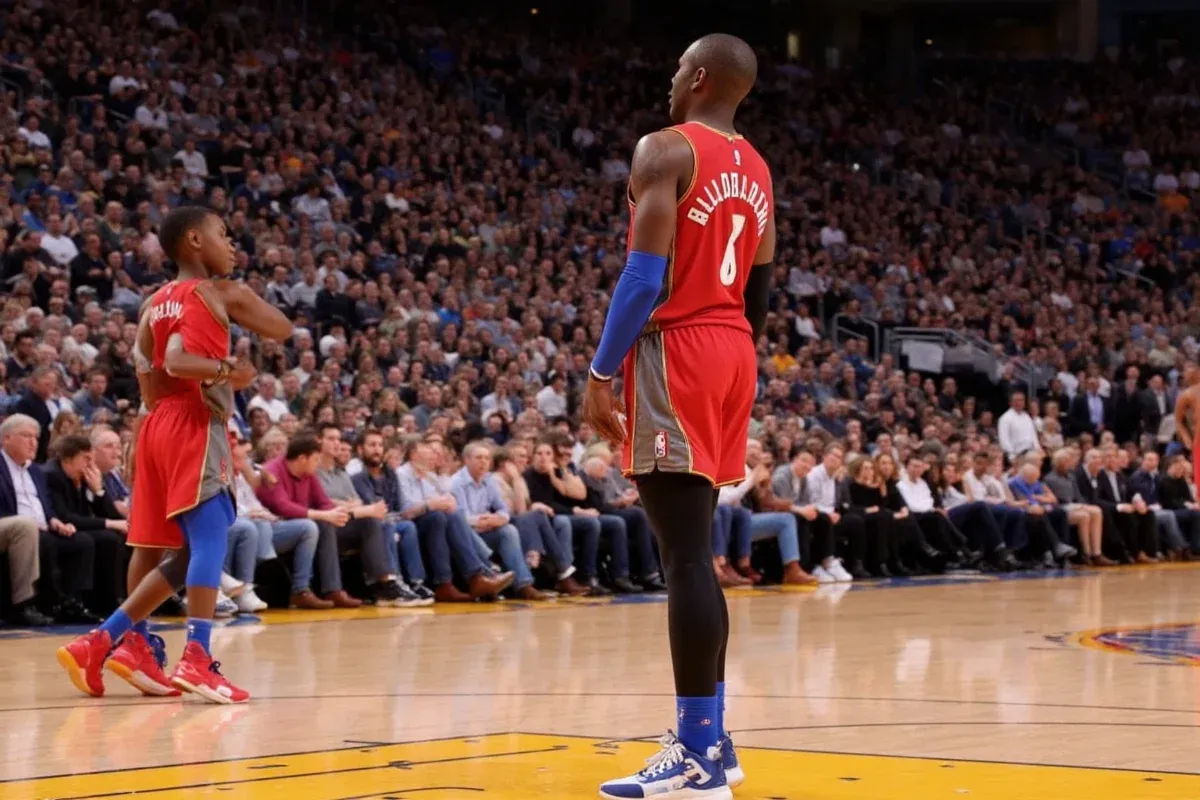 Who Is the Shortest NBA Player Ever? Muggsy Bogues at 5'3"
 What Basketball Does the NBA Use? Official Ball Details
 How To Match Players With Today: A Tactical Framework for Real-Time Roster Optimization
 What Time Is Basketball Today? NBA Game Schedule 2025
 How Many Basketballs Fit in a Rim?
 Where Are the Golden State Warriors From?
 What Channel Is Purdue Basketball On Today? (2025)