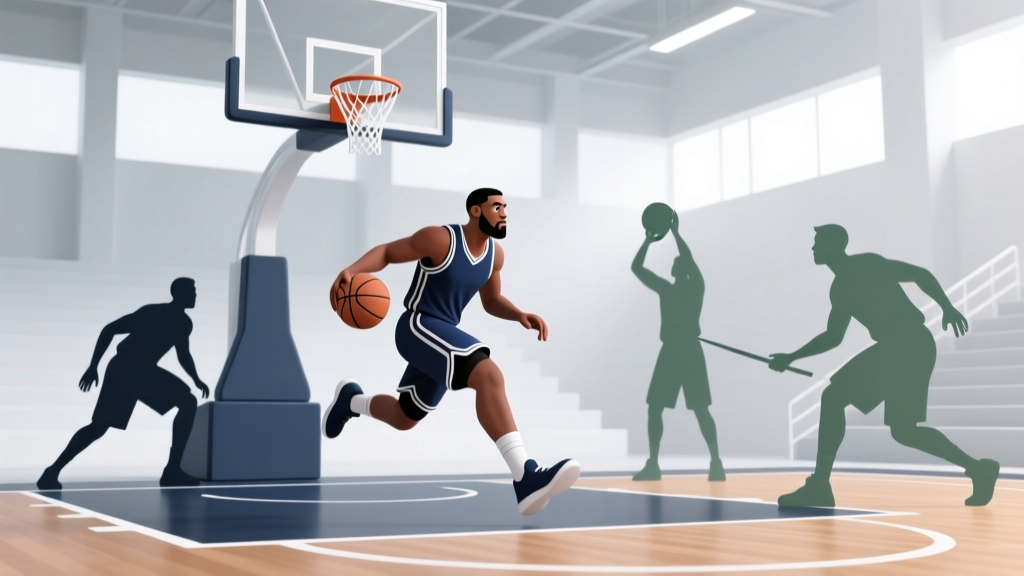
What Do Forwards Do in Basketball? Key Roles Explained
In basketball, forwards are versatile players primarily responsible for scoring, rebounding, and defending. They operate both inside near the basket and on the perimeter, contributing offensively through mid-range shots, drives, and three-pointers, while also guarding multiple positions and protecting the rim. There are two main types—small forwards and power forwards—each with distinct roles that adapt to modern NBA and international play styles.
Understanding the Forward Position in Basketball
Forwards are essential contributors on both offense and defense. Positioned between guards and centers, they combine size, athleticism, and skill to impact the game in multiple ways. Their responsibilities vary based on team strategy, opponent matchups, and league (NBA vs. FIBA), but core duties remain consistent across levels of play.
Types of Forwards
- Small Forward (SF): Typically athletic and well-rounded, small forwards excel at scoring from all areas, defending multiple positions, and initiating fast breaks.
- Power Forward (PF): Traditionally more physical and focused on interior play, modern power forwards often stretch the floor with three-point shooting and switch defensively. \li>
Offensive Responsibilities of Forwards
Forwards are key offensive weapons due to their ability to score in various ways and create opportunities for teammates.
Primary Offensive Roles
- Scoring from mid-range and beyond the arc
- Driving to the basket and finishing through contact
- Operating from the high post or elbow in pick-and-pop actions
- Rebounding offensive misses and converting second-chance points
- Facilitating ball movement when double-teamed
- Spacing the floor to allow guards room to operate
Defensive Duties of Forwards
Defensively, forwards must be adaptable, often tasked with guarding multiple positions and anchoring team schemes.
Key Defensive Responsibilities
- Guarding opposing wings and stretch bigs
- Switching seamlessly in pick-and-roll coverage
- Protecting the paint as help defenders
- Boxing out and securing defensive rebounds
- Rotating quickly to close out shooters
- Applying pressure on passing lanes for steals
Statistical Impact: How Forwards Contribute
The evolution of basketball has redefined forward production, especially with the rise of positionless play. Below is a comparison of key performance metrics for elite forwards in the 2024 NBA season.
| Player | Position | PPG | RPG | APG | 3P% | FG% | MPG |
|---|---|---|---|---|---|---|---|
| LeBron James | SF/PF | 25.3 | 7.6 | 8.0 | 36.7% | 51.3% | 35.5 |
| Giannis Antetokounmpo | PF | 30.4 | 11.6 | 6.2 | 28.2% | 56.2% | 36.1 |
| Kevin Durant | SF | 26.9 | 6.3 | 4.2 | 38.1% | 52.8% | 37.2 |
| Julius Randle | PF | 21.5 | 9.3 | 4.5 | 34.4% | 46.5% | 34.8 |
| Jimmy Butler | SF | 22.9 | 5.9 | 5.3 | 30.1% | 49.0% | 36.0 |
The data shows that top-tier forwards average over 20 points and 6+ rebounds per game, with increasing three-point volume even among traditional inside players like Giannis. LeBron and Durant exemplify the modern forward's versatility, combining high scoring efficiency with elite playmaking. The trend indicates a shift toward multi-skilled athletes who can dominate in multiple statistical categories.
Evolution of the Forward Role in Modern Basketball
The NBA's pace-and-space era has transformed forwards into hybrid players. Power forwards now regularly shoot threes, while small forwards often initiate offense. Positionless basketball emphasizes skill over size, allowing forwards like Draymond Green or Pascal Siakam to thrive despite not fitting traditional molds.
Notable Trends
- Increased three-point attempts from power forwards (up 40% since 2015)
- More minutes played in small-ball lineups (e.g., "death lineup" configurations)
- Greater emphasis on switching defense, requiring agility and IQ
- Rise of point-forward roles (e.g., LeBron, Tatum facilitating primary offense)
Frequently Asked Questions About Forwards in Basketball
What do forwards do in basketball?
Forwards are versatile players who score, rebound, defend multiple positions, and facilitate offense. Small forwards focus on all-around play, while power forwards contribute inside and increasingly from beyond the arc.
What's the difference between a small forward and a power forward?
Small forwards are typically quicker and more agile, excelling at scoring and perimeter defense. Power forwards are usually stronger and rebound better, though modern ones also shoot threes and switch defensively.
Can a forward be the best player on a team?
Absolutely. Many MVPs are forwards, including LeBron James, Kevin Durant, and Giannis Antetokounmpo, who lead their teams in scoring, playmaking, and defense.
Do forwards need to shoot three-pointers?
In today's NBA, yes—especially for power forwards. Floor spacing is critical, and forwards who can knock down threes create advantages for teammates and prevent defensive collapses.
Who are some of the best forwards in NBA history?
Legends include Larry Bird, Tim Duncan, Scottie Pippen, and Karl Malone. Current stars like Jayson Tatum, Giannis, and Kevin Durant continue this legacy with dynamic two-way play.
More Articles
 Best Basketball Shoes: Performance and Fit
 LeBron vs. Curry: Who Is Better at Basketball?
 How Many People Play Basketball Worldwide in 2025?
 Basketball Ops: Matching Origins With Data
 How Long Are College Basketball Quarters? (Real Answer)
 Michigan Basketball Next Game & Schedule (2026)
 Best Baseball for Athletes: Performance, Safety, and Regulation Compliance Explained
 When Do College Basketball Rankings Come Out?
 What Time Is Basketball Today? NBA Game Schedule 2025
 Next NBA Game 2024: Start Date & Schedule