How Wide Is a Basketball? Official Sizes & Dimensions
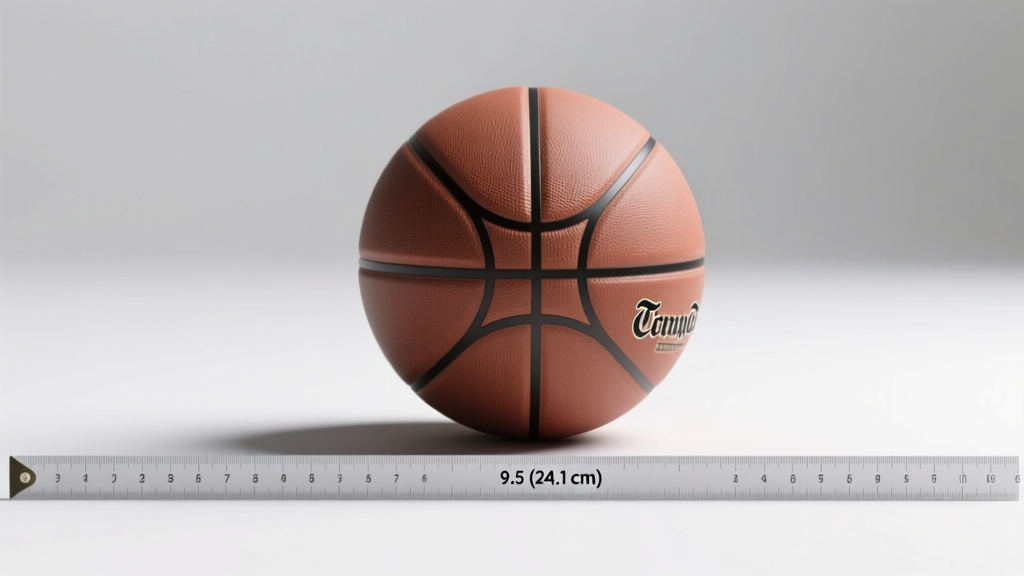
A standard basketball used in professional and organized play has a circumference of approximately 29.5 inches (75 cm) for men’s games and 28.5 inches (72 cm) for women’s games, corresponding to a diameter of about 9.4 inches (23.9 cm) and 9.1 inches (23.1 cm), respectively.
Understanding Basketball Dimensions
The width of a basketball is typically measured by its diameter, which is derived from its circumference. While the term "how wide is a basketball" may seem simple, the answer depends on the level of play, gender-specific regulations, and official standards set by leagues such as the NBA, WNBA, and NCAA.
Why Circumference Matters More Than Diameter
Manufacturers and sports organizations specify basketball size by circumference rather than diameter because it's easier to measure accurately around the ball. From this measurement, the diameter can be calculated using the formula: diameter = circumference ÷ π.
- The official size for men’s basketball is designated as Size 7
- Women’s official game ball is Size 6
- Youth players often use smaller sizes (Sizes 5, 4, or even 3)
- Basketball size affects handling, shooting mechanics, and passing accuracy
Standard Basketball Sizes Across Leagues
Different leagues and age groups use specific basketball sizes to match player physiology and skill development. Below is a detailed comparison of official basketball dimensions.
| League/Category | Ball Size | Circumference (inches) | Circumference (cm) | Diameter (inches) | Diameter (cm) | Weight (oz) | Weight (g) |
|---|---|---|---|---|---|---|---|
| NBA (Men) | Size 7 | 29.5 | 75 | 9.4 | 23.9 | 22 | 624 |
| WNBA (Women) | Size 6 | 28.5 | 72 | 9.1 | 23.1 | 20 | 567 |
| NCAA Men | Size 7 | 29.5 | 75 | 9.4 | 23.9 | 22 | 624 |
| NCAA Women | Size 6 | 28.5 | 72 | 9.1 | 23.1 | 20 | 567 |
| FIBA Men | Size 7 | 29.5 | 75 | 9.4 | 23.9 | 22 | 624 |
| FIBA Women | Size 6 | 28.5 | 72 | 9.1 | 23.1 | 20 | 567 |
| Youth (Ages 9–12) | Size 5 | 27.5 | 70 | 8.8 | 22.4 | 17 | 482 |
| Mini (Under 8) | Size 3 | 22.0 | 56 | 7.0 | 17.8 | 10 | 283 |
The data shows consistent standards across major leagues like the NBA, WNBA, and FIBA. The primary distinction lies between men’s and women’s balls, with a 1-inch difference in circumference. Youth sizes are significantly smaller to accommodate developing hand strength and coordination.
Interestingly, while weight varies slightly, the proportional relationship between size and weight ensures balanced performance characteristics across categories.
How Basketball Size Affects Performance
Selecting the correct basketball size is crucial for skill development, injury prevention, and optimal gameplay. Using an incorrectly sized ball can hinder shooting form, reduce ball-handling efficiency, and lead to overuse injuries in young athletes.
Key Impacts of Incorrect Ball Size
- Poor shooting arc due to improper grip and release
- Reduced dribbling control and increased turnovers
- Hand and wrist strain, especially in youth players
- Delayed motor skill development in children
- Inconsistent passing accuracy and strength
Materials and Construction Influencing Perceived Width
While physical dimensions are standardized, the material and texture of a basketball can influence how wide or large it feels in a player’s hand. Composite leather, genuine leather, and rubber coverings each offer different grip levels and tactile feedback.
- Leather balls: Used in NBA indoor games; softer feel, better grip over time
- Composite leather: Common in amateur leagues; durable and weather-resistant
- Rubber: Often used outdoors; thicker walls may slightly affect perceived size
Texturing such as pebbling or channel depth also impacts finger placement, making a properly sized ball easier to control despite minor variations in actual width.
Frequently Asked Questions About Basketball Width
How wide is a regulation NBA basketball?
A regulation NBA basketball has a diameter of approximately 9.4 inches (23.9 cm), derived from its official circumference of 29.5 inches (75 cm). This size, known as Size 7, is also used in men’s college and international competitions.
What is the diameter of a women’s basketball?
The diameter of a women’s basketball (Size 6) is about 9.1 inches (23.1 cm), based on its 28.5-inch (72 cm) circumference. This smaller size allows for better ball control and shooting mechanics in women’s leagues like the WNBA and NCAA women’s basketball.
Does the width of a basketball vary by brand?
No, the width of a basketball does not significantly vary by brand when adhering to official standards. Major manufacturers like Spalding, Wilson, and Molten produce balls within strict tolerances defined by governing bodies such as the NBA, WNBA, and FIBA.
How do I measure the width of a basketball at home?
To measure the width (diameter) of a basketball at home, first measure the circumference using a flexible tape measure around the widest part. Then divide that number by π (approximately 3.14). For example, 29.5 ÷ 3.14 = ~9.4 inches.
Why is there a difference in basketball size between men and women?
The difference in basketball size accounts for average hand size and strength disparities between male and female players. A smaller ball improves handling, shooting accuracy, and overall performance for women, promoting fair and competitive play.
More Articles
 Michigan State Basketball Tonight: What Channel?
 Basketball Court Measurements by League
 When Does Basketball Season Start? 2025–2026 Dates by League
 What Basketball Team Does LeBron James Play For? (2025)
 What Channel Is UNC Basketball On Today? - Oct 2025
 Basketball Hoop Diameter: 18 Inches Standard
 When Does College Basketball Season Start? 2025-26 Dates
 What Basketball Does the NBA Use? Official Ball Details
 Basketball Calories Burned: By Weight & Intensity (2026)
 How Long Does a Basketball Game Last? Full Breakdown