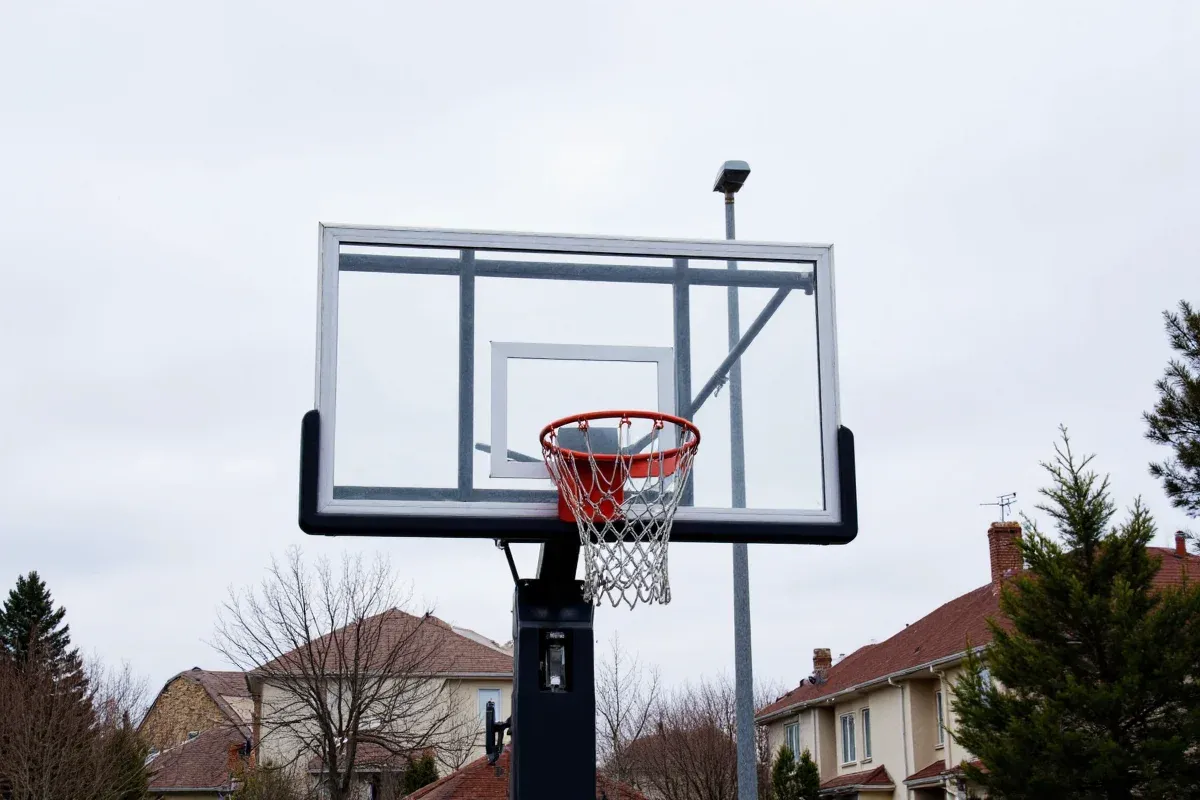
NBA Hoop Height: How Tall Is a Basketball Rim?
The official height of a basketball hoop in the NBA is 10 feet (3.05 meters) above the ground. This standard has been consistently used since the inception of the game and remains unchanged across all NBA games, practices, and official facilities.
Why Is the NBA Hoop Height Set at 10 Feet?
The 10-foot rim height is foundational to the sport's design and fairness. Established by Dr. James Naismith in 1891, this measurement has remained constant despite evolution in player athleticism and style of play.
Historical Origins
- Dr. Naismith hung peach baskets on a balcony railing at 10 feet high—the exact height of the track running around the gym.
- No scientific reasoning was involved; it was purely circumstantial.
- The height stuck as basketball grew into a professional sport.
Impact on Gameplay
A 10-foot rim creates a balance between scoring and defense. It challenges players’ vertical leap, timing, and shooting accuracy.
- Dunks require elite jumping ability—only possible for athletes with a vertical leap of approximately 30–40 inches.
- Shooting arcs must be optimized to clear the rim and fall cleanly through the net.
- Defensive shot-blocking becomes a strategic advantage at this height.
NBA vs. Other Basketball Leagues: Hoop Height Comparison
While the NBA maintains a 10-foot standard, other leagues adjust hoop height based on age, gender, or developmental goals.
| League/Division | Hoop Height (feet) | Hoop Height (meters) | Notes |
|---|---|---|---|
| NBA | 10 | 3.05 | Standard for all professional men’s games |
| NCAA Men | 10 | 3.05 | Same as NBA |
| NCAA Women | 10 | 3.05 | No difference from men’s college basketball |
| High School (NFHS) | 10 | 3.05 | Matches professional standard |
| FIBA | 10 | 3.05 | International competitions including Olympics |
| Junior High (Ages 11–13) | 9 | 2.74 | Reduced height for skill development |
| Youth Basketball (Ages 6–10) | 6–8 | 1.83–2.44 | Adjustable based on age group |
| Special Olympics | 9 or 10 | 2.74 or 3.05 | Adapted for participant ability |
The data shows that while elite levels universally use a 10-foot rim, youth and developmental leagues often lower the hoop to encourage proper shooting form and build confidence. The consistency across NBA, NCAA, FIBA, and high school standards ensures smooth transitions for athletes advancing through competitive tiers.
Measuring and Maintaining NBA Rim Height
Precision is critical. During NBA games, arena staff verify rim height before tip-off using calibrated measuring tools.
Regulation Requirements
- Rims must be exactly 10 feet from the playing surface to the top of the ring.
- The court surface must be flat and level to ensure accurate measurement.
- If a rim is found to be out of regulation, it must be adjusted immediately.
Tools Used
- Laser distance measurers
- Telescopic measuring poles
- Digital inclinometers to check backboard angle
Frequently Asked Questions About NBA Hoop Height
How high is an NBA basketball hoop in feet?
An NBA basketball hoop is exactly 10 feet (3.05 meters) high from the playing surface to the top of the rim. This height is standardized across all arenas and enforced by league regulations.
Has the NBA ever changed the height of the rim?
No, the NBA has never changed the rim height since its founding in 1946. The 10-foot standard dates back to 1891 when basketball was invented by Dr. James Naismith.
Do women’s professional leagues use the same hoop height?
Yes, the WNBA uses the same 10-foot hoop height as the NBA. There is no difference in rim height between men’s and women’s professional basketball.
Why don’t they lower the hoop to increase scoring?
Lowering the hoop would fundamentally alter the sport’s dynamics, reducing the athletic challenge of dunking and shot-blocking. The NBA prioritizes tradition, fairness, and competitive balance over artificial scoring increases.
How high do players jump to reach the rim?
Most NBA players need a vertical leap of at least 30 inches to touch the rim, and around 40 inches to dunk comfortably. Elite leapers like Michael Jordan and Zach LaVine have exceeded 44 inches in testing.
More Articles
 How Long Is a Half in College Basketball?
 Who Won Basketball Olympics 2024? Full Results & Stats
 Who Is Playing Today in Basketball? NBA Schedule & Matchups
 When Was the First NBA Game Played?
 Did Stephen A. Smith Play Professional Basketball?
 Team Basketball Gear Guide for Coaches
 Who Are the Richest Basketball Players in 2025?
 NBA Basketball Size: Official Dimensions & Guidelines
 How Tall Are Basketball Rims? Official Height Explained
 How Long Is NBA Basketball Season? Full Breakdown