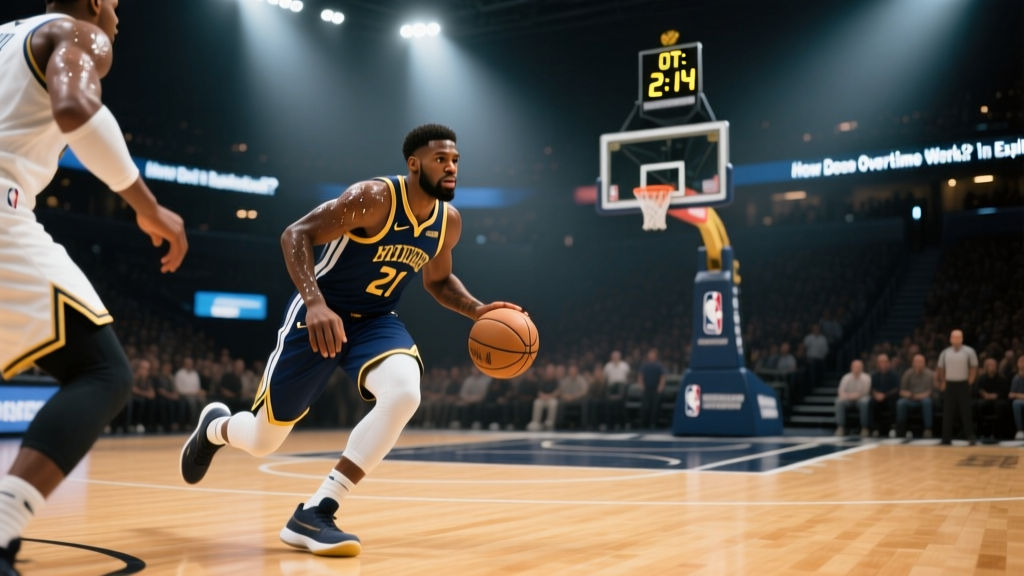
How Does Overtime Work in Basketball? Explained
In basketball, overtime occurs when a game is tied at the end of regulation time, with each overtime period lasting 5 minutes. The team with the most points at the end of overtime wins. If the score remains tied, additional 5-minute overtime periods continue until a winner is determined.
How Overtime Works in Basketball: A Complete Guide
Overtime in basketball ensures a decisive outcome when teams are tied after the standard 48 minutes (NBA) or 40 minutes (FIBA, NCAA) of regulation play. It adds excitement and tests endurance, strategy, and mental toughness under pressure.
Understanding the Basics of Overtime
Overtime periods are used across professional and amateur leagues to determine a winner in case of a tie. Here's how it works:
- Overtime begins immediately after regulation ends.
- Each overtime period lasts 5 minutes in most leagues, including the NBA and FIBA.
- Teams switch baskets from the previous half to maintain fairness.
- If the score is still tied after one overtime, additional 5-minute periods continue until one team leads at the end.
- Fouls carry over into overtime, and team foul counts reset for shooting fouls only if specified by league rules.
NBA vs. International Rules
The NBA and FIBA (International Basketball Federation) follow similar overtime structures but differ slightly in timing and foul accumulation.
| League | Regulation Time | Overtime Duration | Max Overtime Periods | Historical Example of Longest Game |
|---|---|---|---|---|
| NBA | 48 minutes (4 x 12) | 5 minutes | Unlimited | 6 overtimes (Dec 21, 1951: Rochester Royals vs. Indianapolis Olympians) |
| NCAA Men | 40 minutes (2 x 20) | 5 minutes | Unlimited | 7 overtimes (Dec 21, 2009: Connecticut vs. Syracuse) |
| FIBA | 40 minutes (4 x 10) | 5 minutes | Unlimited | Multiple games with 2–3 OTs common; no official record beyond 3 OT |
| WNBA | 40 minutes (4 x 10) | 5 minutes | Unlimited | 3 overtimes (multiple instances, e.g., 2020 playoffs) |
The data shows that while all major leagues use 5-minute overtime periods, the NBA has seen the longest recorded games due to its higher scoring and pace. Unlimited overtime periods ensure a winner, though games exceeding three overtimes are rare due to player fatigue and strategic timeouts.
Strategic Impact of Overtime
Overtime changes coaching decisions and player usage significantly. Key factors include:
- Player Fatigue: Coaches must manage minutes carefully, especially for starters who may have played heavy loads during regulation.
- Foul Trouble: Players with 5 or 6 fouls (depending on league) risk disqualification, limiting substitutions.
- Bench Depth: Teams with stronger benches often perform better in extended games.
- Timeout Allocation: Each team gets one additional timeout for each overtime period in the NBA, affecting late-game strategy.
- Scoring Adjustments: Defenses tighten, shot selection improves, and free throws become more critical.
Famous Overtime Games in Basketball History
Some of the most memorable moments in basketball occurred during overtime:
- 2016 NBA Finals, Game 7: LeBron James led the Cleveland Cavaliers to victory over the Golden State Warriors, ending a 52-year championship drought.
- 2005 NBA Finals, Game 5: The Spurs defeated the Pistons in triple overtime, considered one of the greatest defensive series ever.
- 2012 NCAA Tournament: Ohio University beat South Florida in quadruple overtime, showcasing resilience and stamina.
Common Questions About Overtime in Basketball
How long is an overtime period in basketball?
An overtime period in basketball is 5 minutes long in the NBA, WNBA, FIBA, and NCAA games. This duration continues for each additional overtime until a winner is decided.
What happens if the game is still tied after overtime?
If the score remains tied after one overtime, another 5-minute overtime period begins. There is no limit to the number of overtime periods, ensuring a definitive winner.
Do fouls reset in overtime?
Team fouls reset for the purpose of bonus free throws at the start of overtime in FIBA and NCAA rules. In the NBA, team fouls accumulate throughout the game, including overtime, meaning players can enter foul trouble faster.
How many timeouts do teams get in overtime?
In the NBA, each team receives one additional timeout for each overtime period. Unused timeouts from regulation do not carry over, but teams may save one from the fourth quarter. In FIBA, teams get one timeout per overtime period.
Has any NBA game gone into more than three overtimes?
Yes, multiple NBA games have exceeded three overtimes. The longest in history was a six-overtime game between the Rochester Royals and Indianapolis Olympians on January 24, 1951, which ended 75–73.
More Articles
 When Does the Basketball Season End? NBA, NCAA & More
 Most Popular Basketball Player in 2025: LeBron James
 When Does USA Basketball Play? 2024 Schedule & Game Dates
 Facility Maintenance for Basketball
 When Does Arkansas Play Basketball? 2024-2025 Schedule
 How Much Do Overseas Basketball Players Make? (2025 Data)
 What Channel Is the Illini Basketball Game On Today?
 How Many Quarters in College Basketball? Full Breakdown
 Basketball Traction: Herringbone vs Blade
 How To Match Players With Today: A Tactical Framework for Real-Time Roster Optimization